
Your practical driving test is getting closer. It is easy to focus on driving and forget the small details, such as your licence or where you need to arrive.
Use this checklist to prepare before test day and understand what happens at the test centre.
Driving test checklist: what to bring
- Your UK driving licence. Bring the required licence document. Check GOV.UK’s official list, especially if you have an older paper licence or unusual circumstances.
- A suitable test car. If you are using your own car, check that it meets all DVSA test-car rules. An instructor’s car will usually already be set up for lessons and tests.
- Glasses or contact lenses. Wear them if you need them to meet the eyesight requirement.
- Your booking details. Confirm the test centre, date and time in advance.
- Comfortable footwear. Choose shoes you are used to driving in.
Check the official practical driving test guidance close to your test date, as requirements can change.
The day before your practical driving test
- Confirm how you will get to the test centre and allow extra travel time.
- Check your licence and any other documents you need.
- Agree your pickup time and test-day plan with your instructor.
- Get a good night’s sleep rather than trying to learn everything overnight.
- Review a few common weaknesses without cramming new techniques.
What happens at the driving test centre?
The examiner will check your identity and explain the test process. The test normally includes an eyesight check, vehicle safety questions and driving on different roads. You will also be asked to complete a reversing exercise and drive independently for part of the test.
The examiner is assessing whether you drive safely. You do not need to drive perfectly, but serious or dangerous faults can result in a fail. For the current test structure, read what happens during the driving test.
Know your Show Me, Tell Me questions
You will be asked vehicle safety questions. One involves explaining how you would carry out a safety task; another involves demonstrating a safety task while driving. Review our Show Me, Tell Me questions guide for the full preparation resource rather than trying to memorise answers at the last minute.
Check these driving skills before booking your test
- Observation: use mirrors and blind-spot checks when needed.
- Junctions: approach at a suitable speed and make safe decisions.
- Roundabouts: choose the correct lane and observe other road users.
- Speed: follow limits and adjust to the road and conditions.
- Manoeuvres: maintain control and look all around.
- Independent driving: follow directions safely without relying on constant prompts.
If you still need frequent help from your instructor, it may be better to continue practising. The DVSA Ready to Pass campaign has useful readiness advice.
Should you have a warm-up lesson before the test?
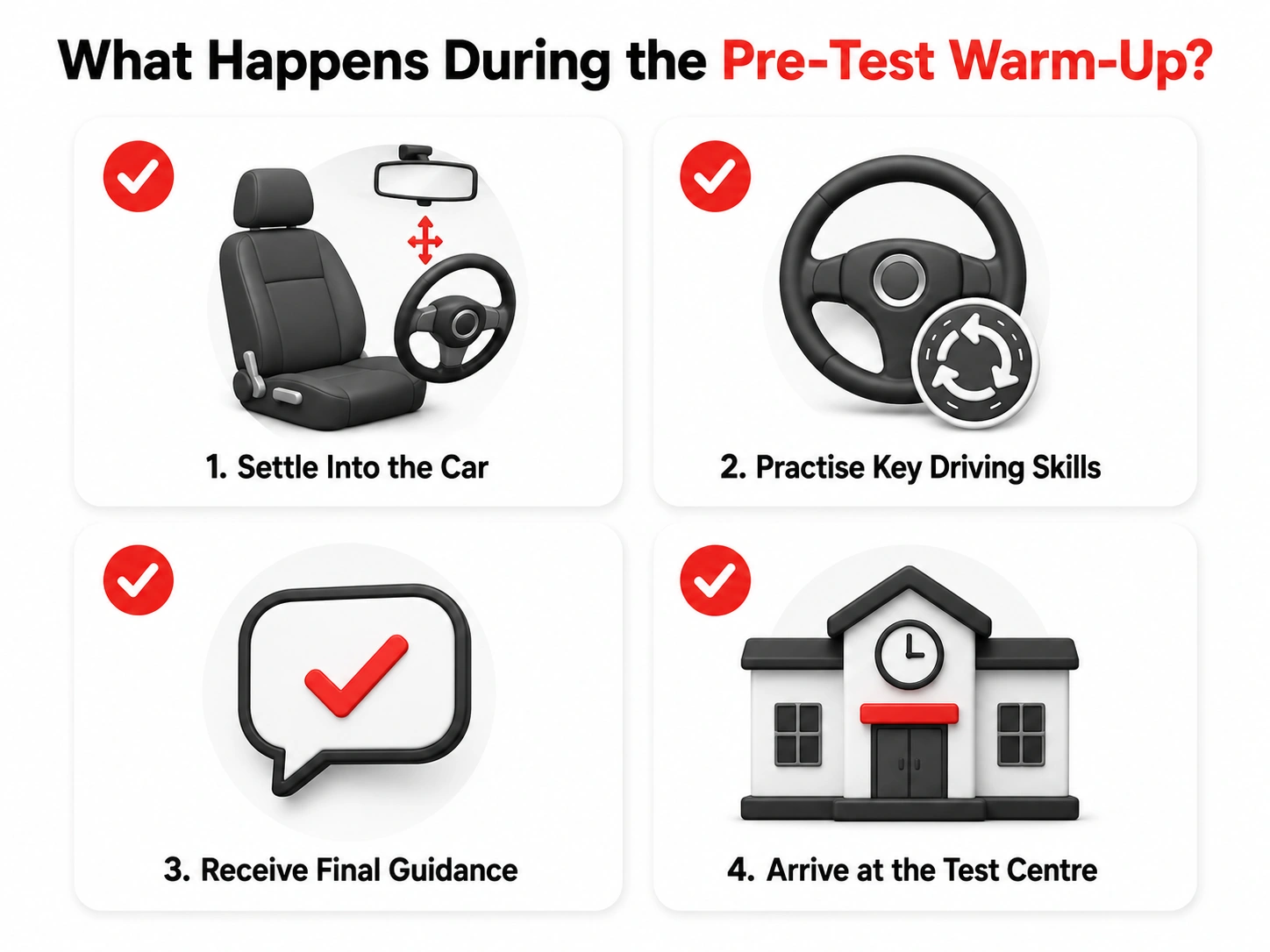
A short drive before the test can help you settle in, adjust your seat and mirrors, and revisit familiar skills. It is not the time to rush through every difficult junction in the area.
Using your instructor’s car or your own car
| Instructor’s car | Your own car |
|---|---|
| Familiar from lessons if you have been learning in it | Must meet DVSA rules for test vehicles |
| Discuss test-day availability and any support fee in advance | Check insurance, roadworthiness and required equipment |
| Instructor can arrange a warm-up where offered | You need a legal plan for getting the car to and from the test |
Read GOV.UK’s rules for using your own car before making a decision.
What if you make a mistake during the test?
Keep driving safely. A small mistake does not automatically mean you have failed. Do not let one uncertain moment distract you from the next junction. If you do not understand an instruction, ask the examiner to repeat it.
What happens after the test?
The examiner will tell you the result and explain any recorded faults. If you pass, follow the instructions about your licence. If you do not pass, use the feedback to plan focused practice before trying again.
Frequently asked questions
Can I take my practical test without my driving instructor?
Yes, if you meet the test requirements and use a suitable car. You do not have to bring your instructor, but you must arrange a legal and suitable test vehicle.
How early should I arrive?
Plan to arrive in good time, following the instructions in your booking confirmation. Allow for traffic and avoid arriving rushed.
Does booking a test mean I am test-ready?
No. A booking confirms your appointment, not your driving standard. Ask your instructor for a realistic assessment of your readiness.
Need a car and support on test day?
Smart Driving School offers Practical Driving Test Support for £150, including a 60-minute warm-up, use of the instructor’s car for the test and the return journey. Contact us in advance to discuss availability and whether the service is suitable for you.